A Buyer's Checklist for Evaluating Proxy Vendors: 6 Checks in 10 Minutes
Choosing a proxy provider doesn’t have to be complicated. In 10 minutes, you can evaluate a vendor by checking trial quality, IP authenticity, billing terms, support response, pool sourcing, and independent reviews. These six checks help you avoid unreliable proxy providers and wasted money.
Buying proxies is weird. Every site looks the same. Same "99.9% uptime" badge, same map with glowing dots, same "90M+ real residential IPs" number that nobody can verify. You read four landing pages and you know less than when you started.
So most people just pick the one with the nicest checkout page. Then they find out three days later that half the pool is dead.
There's a faster way. Six checks, ten minutes, and you'll know if a vendor is worth your money. No trial needed for four of them.
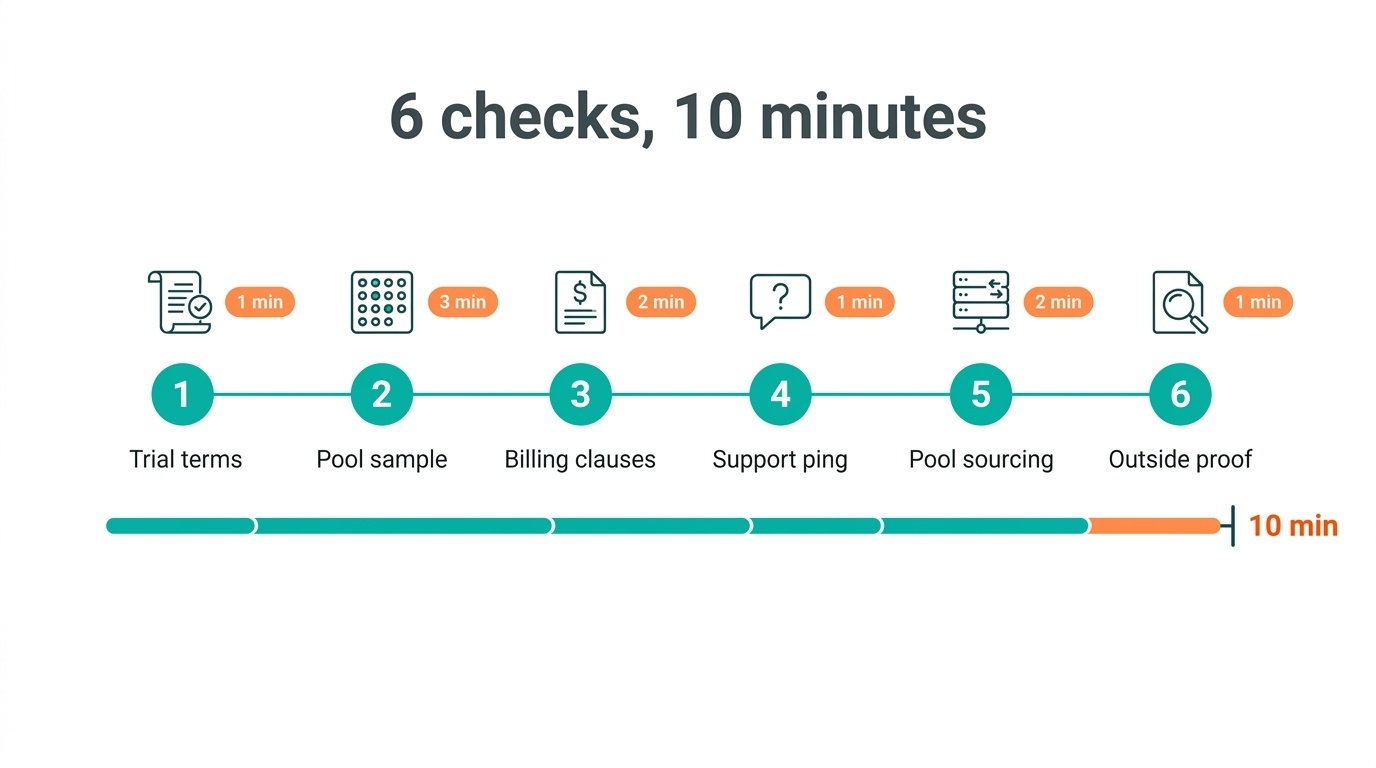
The ten minutes, split up
Check | Time | What it tells you |
1. Trial terms | 1 min | If they're afraid of testing |
2. Pool sample | 3 min | If the IPs are real |
3. Billing clauses | 2 min | If you can get out |
4. Support ping | 1 min to send | If anyone's home |
5. Pool sourcing | 2 min | If the pool will still exist in a month |
6. Outside proof | 1 min | If other buyers agree |
That's it. Let's go through them.
Check 1. What does the trial actually give you?
Not "is there a trial." Almost everyone has one now. The question is what's inside it.
A real trial gives you live IPs from the production pool. A fake trial gives you 100 MB, one country, no rotation control, and a curated set of clean addresses they keep for exactly this purpose.
Ask two things before you sign up:
- Do trial IPs come from the same pool as paid plans?
- Can I pick country and city during the trial?
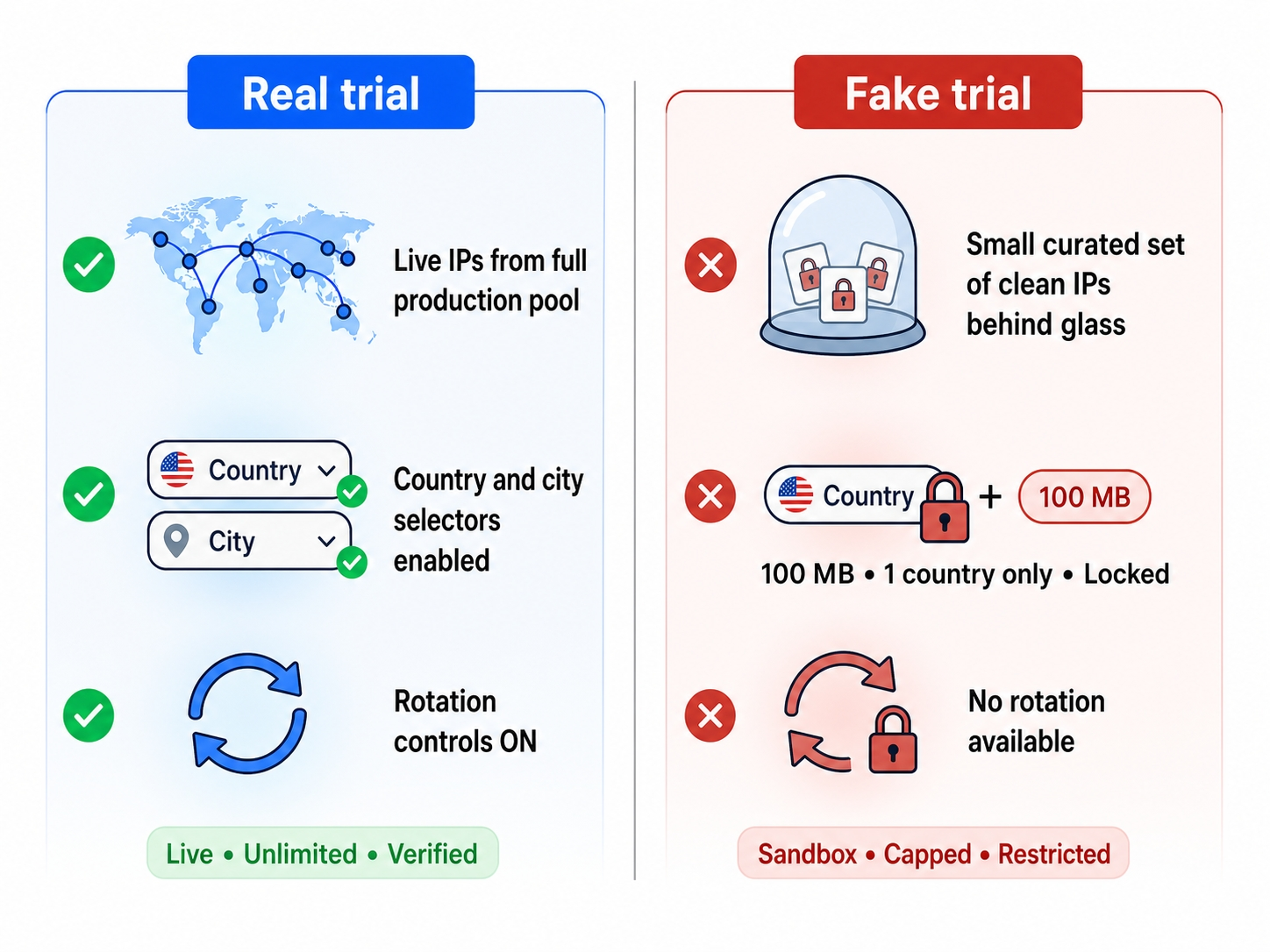
If the answer to either one is no, the trial proves nothing. And if there's no trial at all, only a "contact sales" button, that tells you plenty by itself.
Sites that publish independent hands-on provider reviews are handy here, since they buy the paid plans and post the raw numbers. Cross-check what you're being promised against what somebody measured. Cheap shortcut.
Check 2. Pull 50 IPs and look at them
The single most useful thing you can do. Takes three minutes.
Grab 50 addresses from the trial or from a $5 starter plan. Then run them through neutral tools that have no stake in the answer:
- IPinfo and read the usage type field. isp or residential is what you paid for. hosting means datacenter in a costume.
- Scamalytics for a fraud score. Anything over 30 and you'll be fighting CAPTCHAs all week.
- BrowserLeaks to catch DNS and WebRTC leaks in your setup.
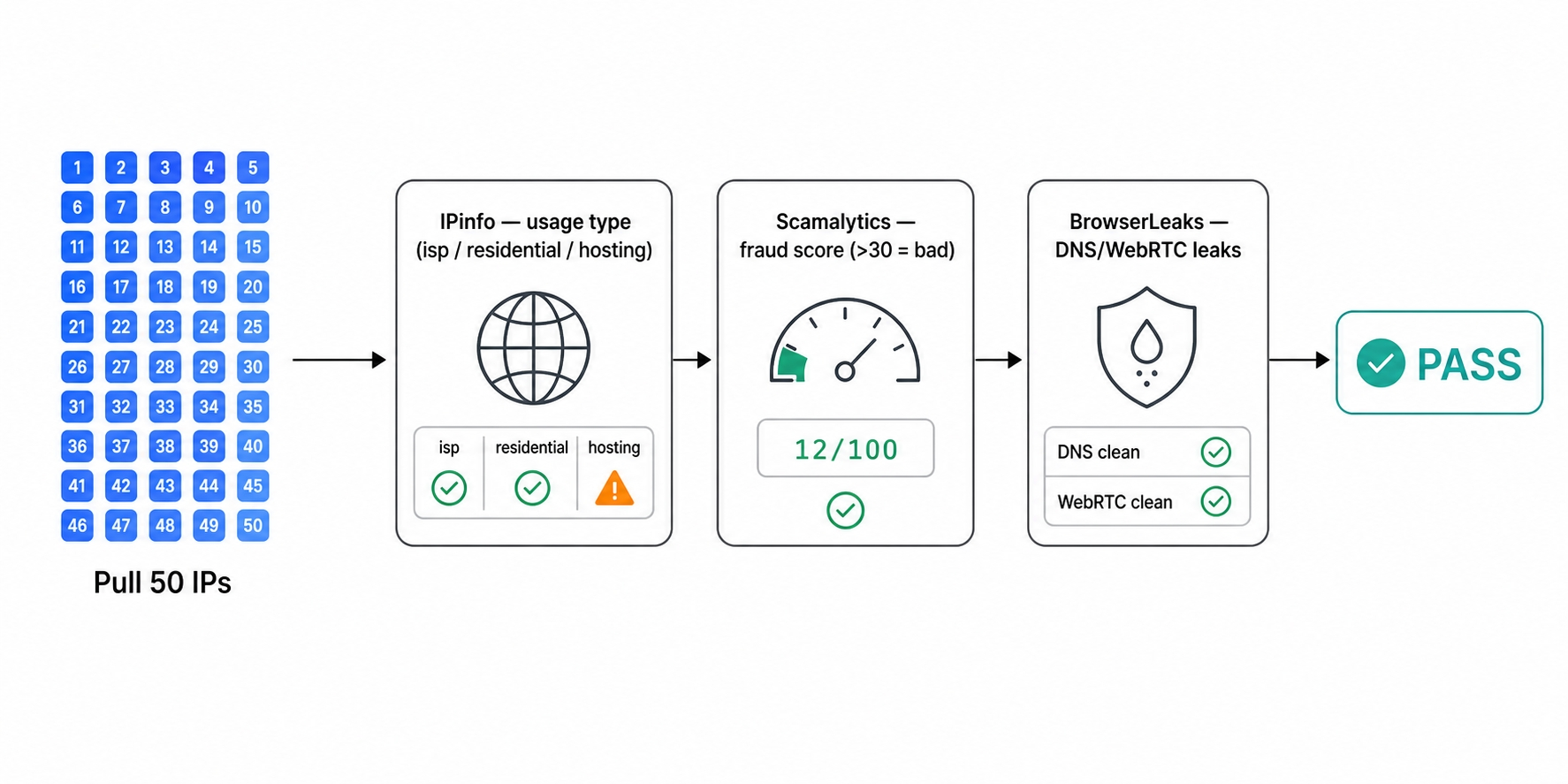
Then look at the ASN spread. If 40 of your 50 IPs sit on the same two autonomous systems, that's not a 90-million pool. That's a small block of addresses being sold hard.
One IP tells you nothing. Fifty tells you almost everything.
Check 3. Read the boring part of the terms
Nobody reads billing terms. Which is exactly why the bad clauses live there.
Four things to hunt for:
- Traffic expiry. Do your gigabytes die after 30 days? Many pools quietly reset unused traffic monthly.
- Refund window. "Money-back guarantee" often means 24 hours, and only if you used under 100 MB.
- Auto-renew and price locks. Some plans renew at a higher rate after the first cycle.
- Suspension rules. Look for wording that lets them kill your account with no refund over a vague policy breach.
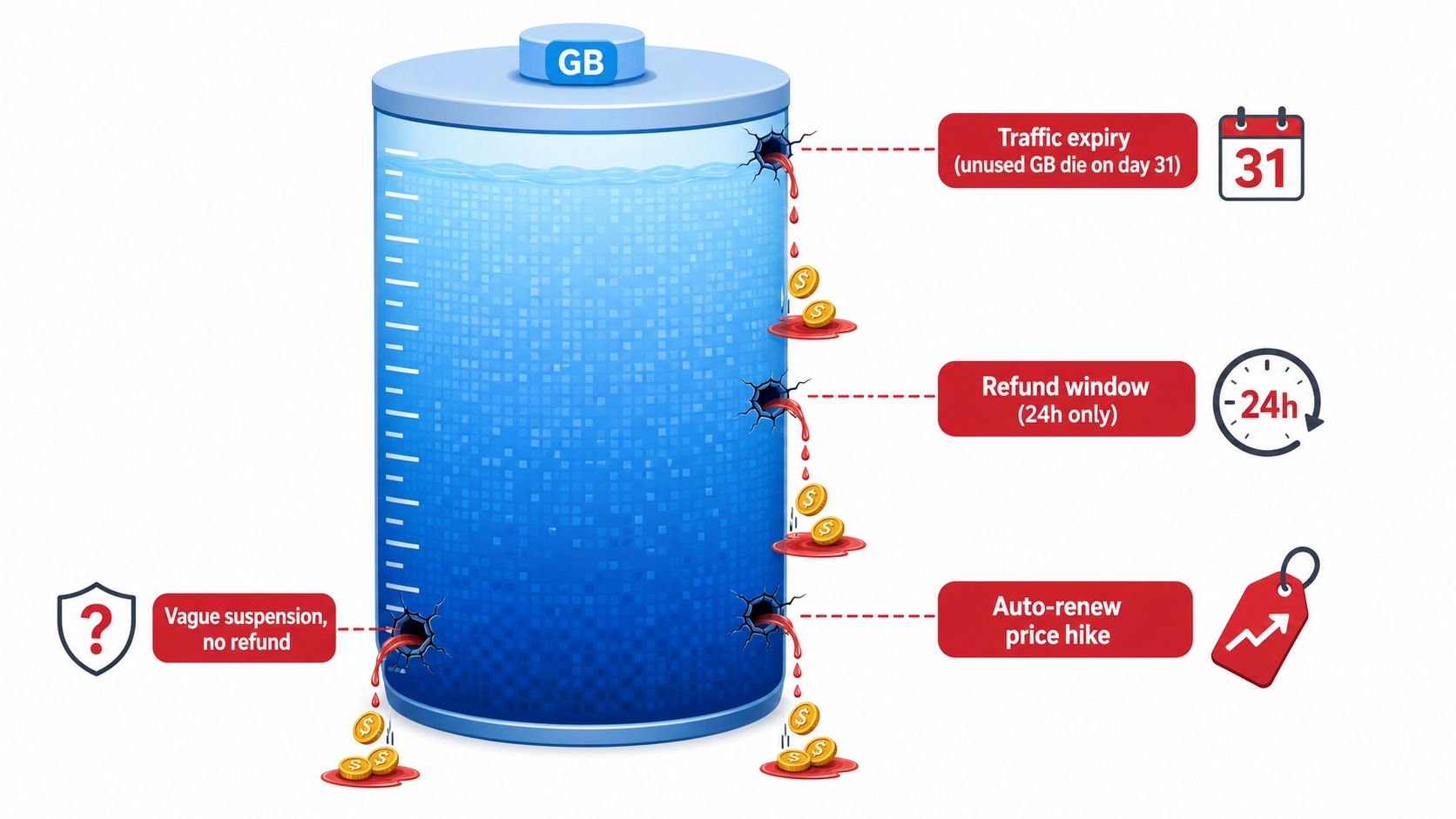
Traffic expiry is the one that stings most. You buy 100 GB at a nice per-gig rate, use 30, and lose 70 on day 31.
Check 4. Ping support before you pay
Send one pre-sale question. Make it specific enough that a canned reply won't cover it. Something like: "Can I get sticky sessions longer than 30 minutes in Germany, and what happens if the IP drops mid-session?"
Then time the answer.
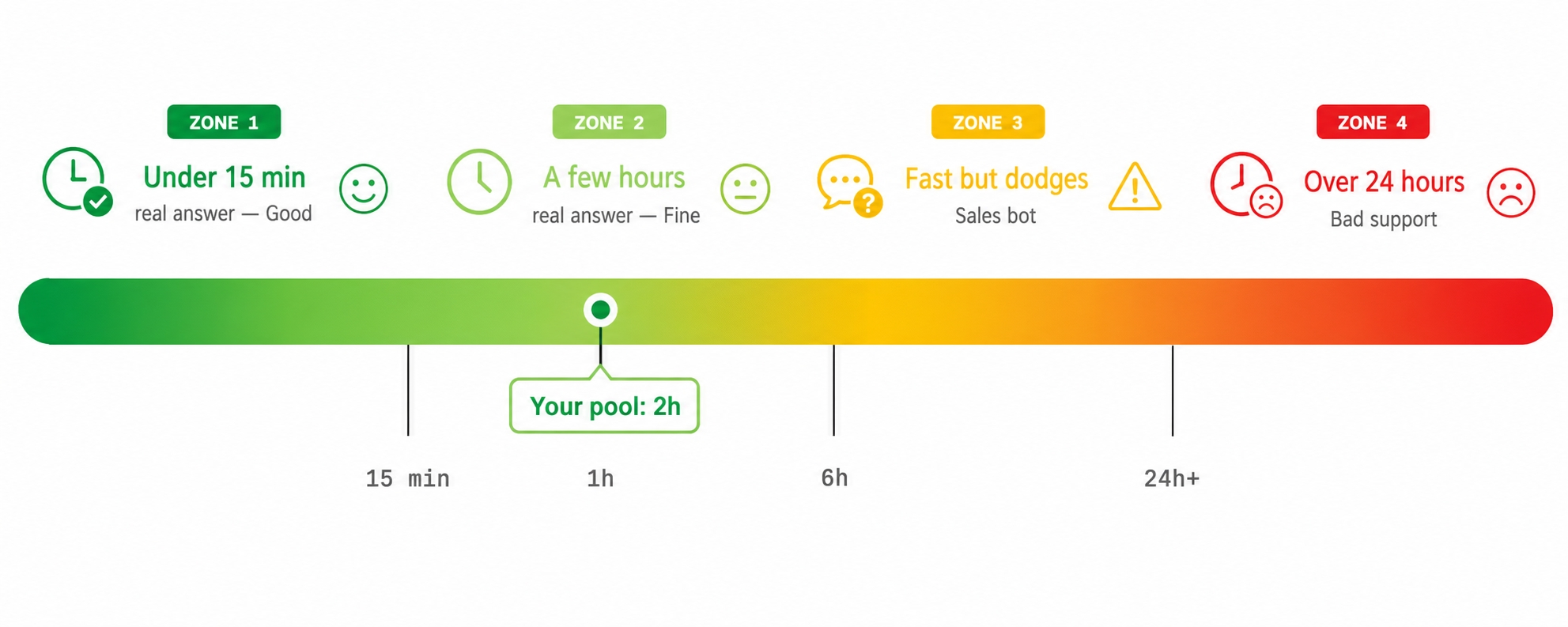
Reply speed | Read it as |
Under 15 min, real answer | Good sign |
A few hours, real answer | Normal, fine |
Fast reply, dodges the question | Sales bot, no engineers nearby |
Over 24 hours | This is your support at 3 AM on a broken job |
Presale support is always the best support a company has. If it's slow now, it'll be worse once you're a customer.
Check 5. Where does the pool come from?
This one filters out the resellers.
Ask straight out: do you own the pool, or do you buy it? A real operator can tell you how peers opt in, usually through an SDK inside apps or a paid rewards program. A reseller changes the subject or answers with marketing copy.
Why you'd care:
- Resold pools get sold to five other vendors, so the same addresses are being hammered by everybody at once.
- When the upstream provider cuts them off, your service dies overnight with no warning.
- Nobody in the chain can fix a bad subnet for you.
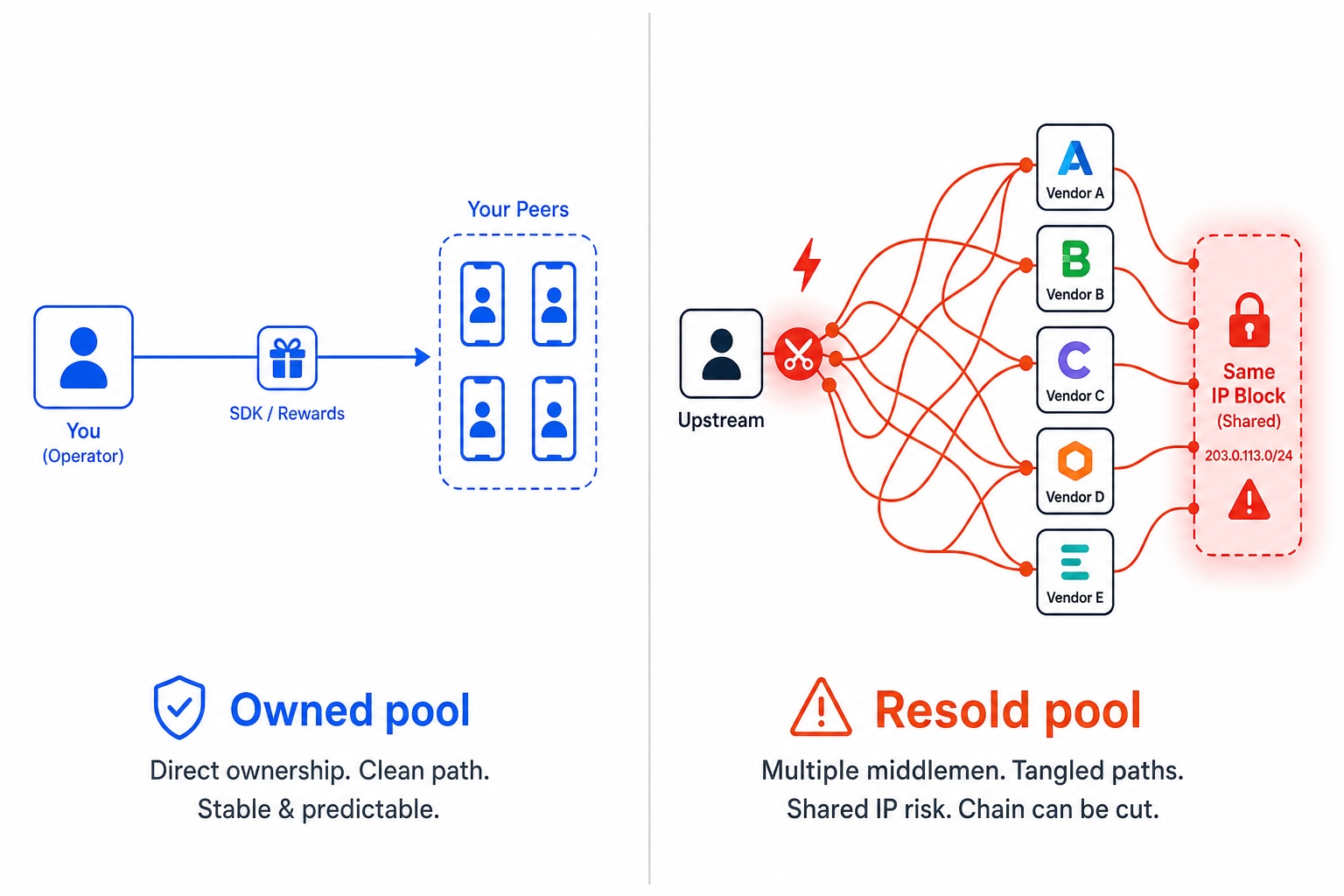
A vendor that's upfront about reselling is honestly fine, sometimes even cheaper. The ones to skip are the ones pretending.
Check 6. What do other buyers say, and where?
Testimonials on the vendor's own site are worth zero. Go look at neutral ground instead.
- Trustpilot for the pattern, not the score. Read the 2 and 3 star reviews, since those are the honest ones.
- Reddit threads in scraping and multi-account subs, sorted by new.
- Hands-on test writeups from people who published their method.
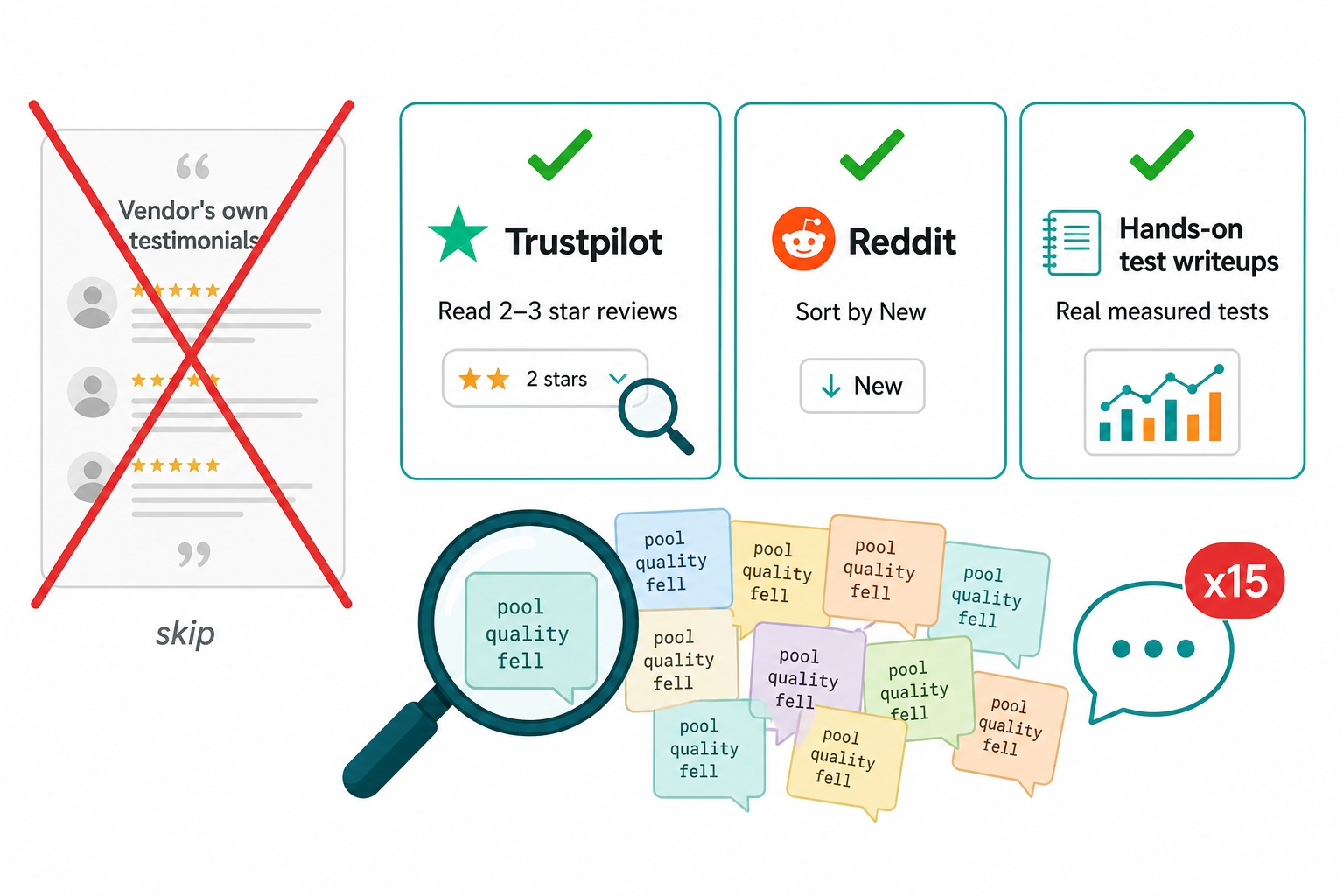
What you're hunting for is repeated complaints. One angry customer means nothing. Fifteen people saying "pool quality fell off a cliff in March" means something.
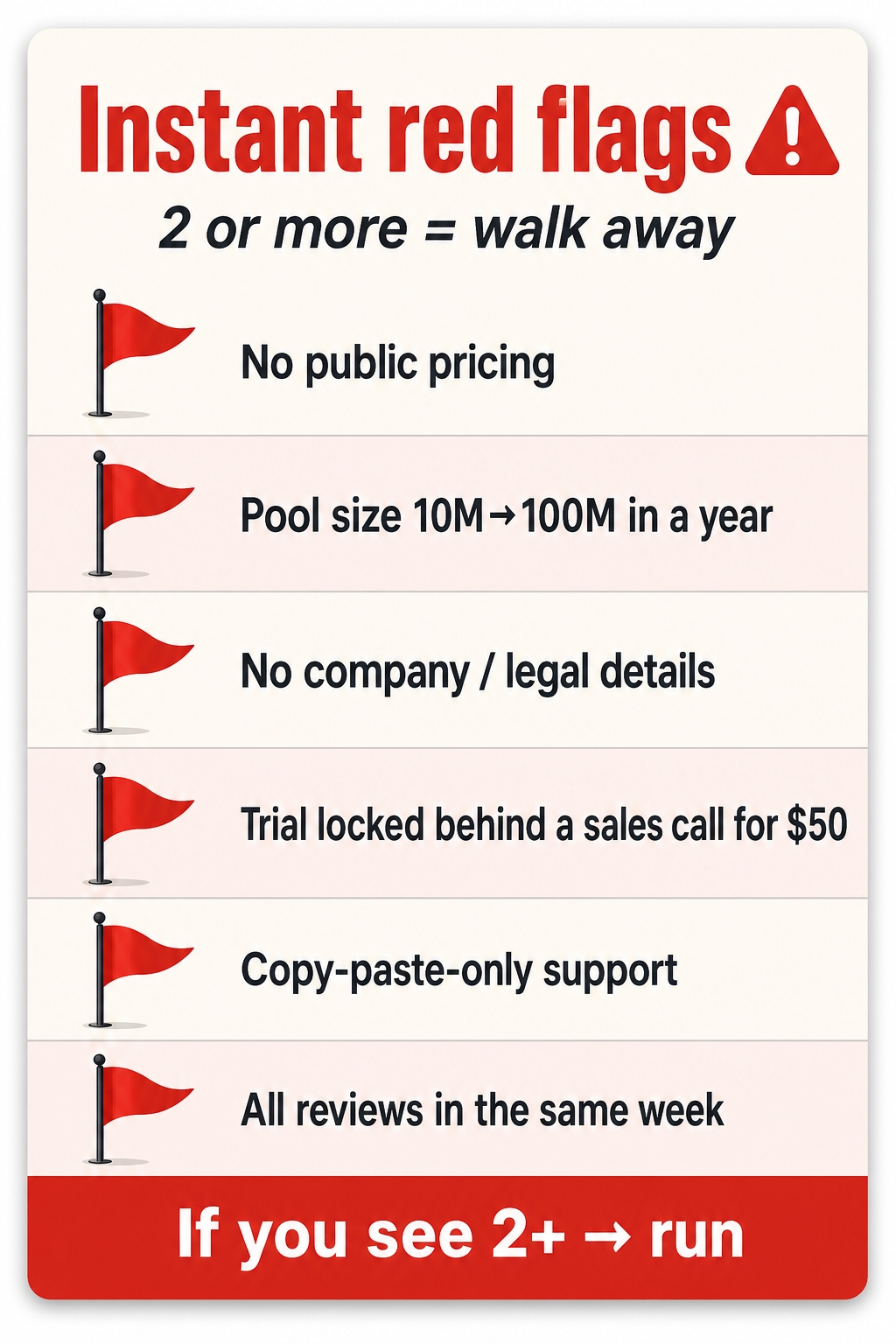
Instant red flags
If you spot two or more of these, walk away:
The short version
- A trial that hides the real pool is not a trial.
- Fifty IPs through IPinfo and Scamalytics beats any sales page.
- Traffic expiry and refund windows are where the money leaks.
- Time your first support reply, and treat that as the ceiling.
- Ask who owns the pool, then listen to how they dodge.
- Believe the 2-star reviews more than the 5-star ones.
Ten minutes. Cheaper than a wasted month.